Dust mites are microscopic relatives of the spider that feed on the dead skin cells we shed. They do not bite, sting or carry disease, and they live in mattresses, sofas, carpets and curtains. You cannot remove them entirely from a lived-in home. Weekly hot washing of bedding, a fully zipped mattress protector and a professional deep clean about every six months are what keep the allergens down.
Dust mites are one of those subjects that sit awkwardly between genuinely useful and pure marketing. Plenty of products are sold on the back of them, most of which do very little. It is worth separating what is true from what is sold, especially in Dubai, where the way we live indoors changes the picture.
Here is the practical version, with no scare tactics.
What a dust mite actually is
A dust mite is a microscopic relative of the spider, far too small to see, and it does not bite, sting or carry disease. It eats the dead skin cells that people and pets shed constantly, which is why it concentrates wherever we spend hours lying still. A bed is close to perfect for them.
For most people they are completely harmless and always have been. The issue is for the minority who react to the proteins the mites leave behind, which is what allergy tests are detecting rather than the mites themselves. The American Lung Association reports that roughly four out of five homes in the United States have dust mite allergens in at least one bed, which tells you how ordinary this is rather than how alarming.
If someone in your home wakes with a blocked nose, itchy eyes or a cough that settles an hour after getting up, and it happens at home rather than outdoors, that pattern is worth mentioning to a doctor. Cleaning is not a diagnosis and it is not a treatment.
Why a Dubai bedroom is a more complicated case than it looks
The common assumption is that Dubai must be terrible for dust mites because it is humid. The reality is more interesting, and it cuts both ways.
Mites take their moisture from the air rather than from drinking, so they struggle when the air is dry. A home with the AC running hard for most of the year is genuinely drier indoors than the outside air suggests, and that works against them.
What works in their favour is everything else about how we live here. Windows stay shut, so the air changes far less often than it does in a climate where people open up every day. Dust settles rather than blowing out. Bedding gets less real sunlight and fresh air. And in the shoulder months, when the AC runs less and the humidity is still high, indoor conditions swing back in their direction for weeks at a time.
The sensible reading: Dubai homes are not a dust mite paradise, but they are dust reservoirs, and the reservoir is the part you can do something about.
What genuinely works
In rough order of how much difference it makes for the effort involved.
- Wash bedding weekly, as hot as the care label allows. Sheets, pillowcases and duvet covers. The American Lung Association recommends a weekly wash at a minimum of 120°F, about 49°C. This is the single highest-value habit, because it removes both the allergens and the skin cells that feed everything.
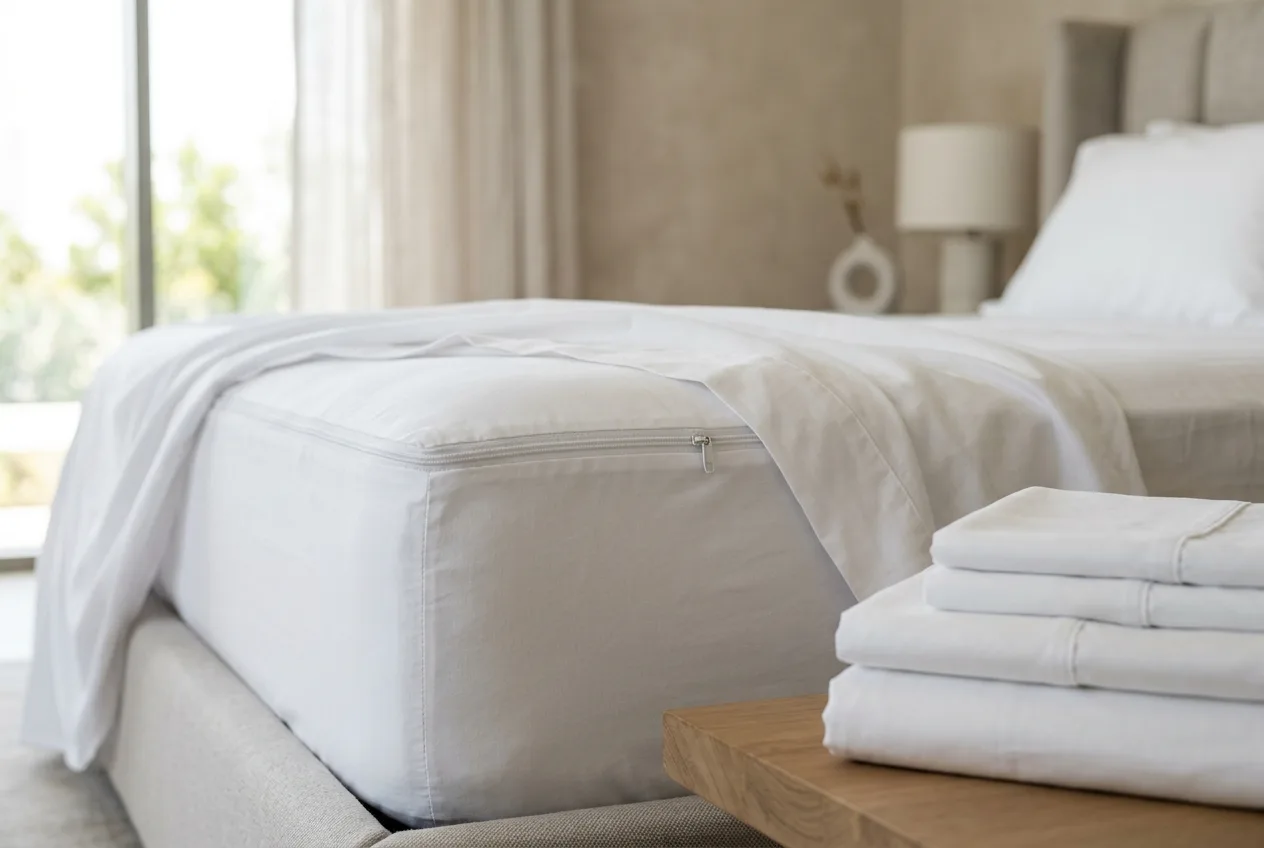
- Use a zipped mattress protector, and wash it. A protector that fully encases the mattress puts a barrier between you and everything already in the core. An unwashed protector is just a second mattress, so it needs the same weekly treatment as the sheets.
- Vacuum properly, and slowly. A HEPA vacuum matters here, because a poor filter puts the fine particles straight back into the room. Do the mattress surface and seams, not only the floor.
- Keep indoor humidity down. Mites take their moisture from the air rather than from drinking, so dry air holds them back. The American Lung Association advises keeping a home below 50 percent humidity, which the AC does for much of the year here. A cheap hygrometer tells you where you actually are.
- Air the room when the weather allows. In the cooler months, a window open for twenty minutes does more for indoor air than any spray.
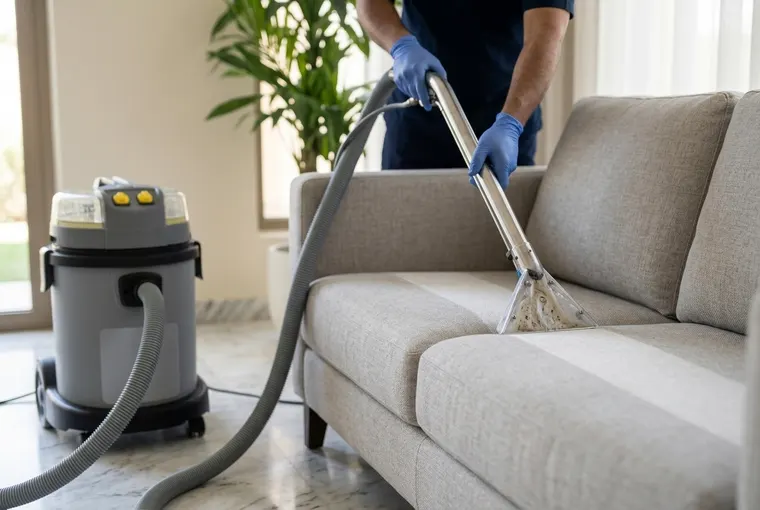
- Deal with the other soft furnishings. The bed gets all the attention, but the sofa and the carpets in the same house hold the same material and feed straight back into the bedroom air.
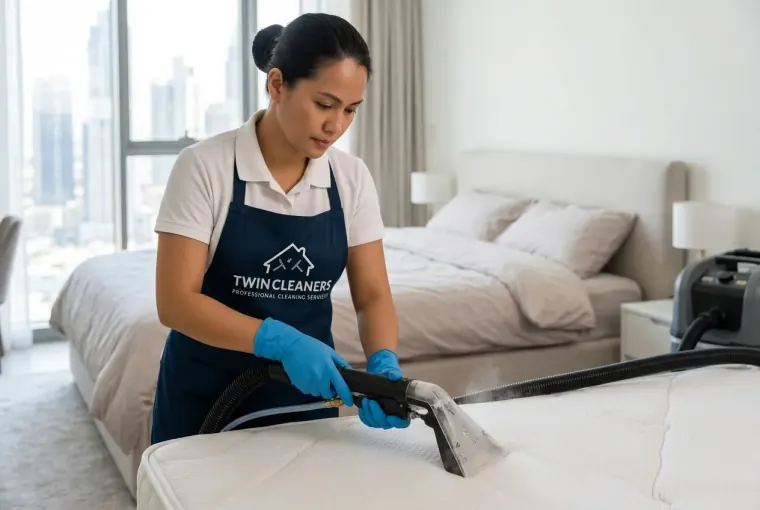
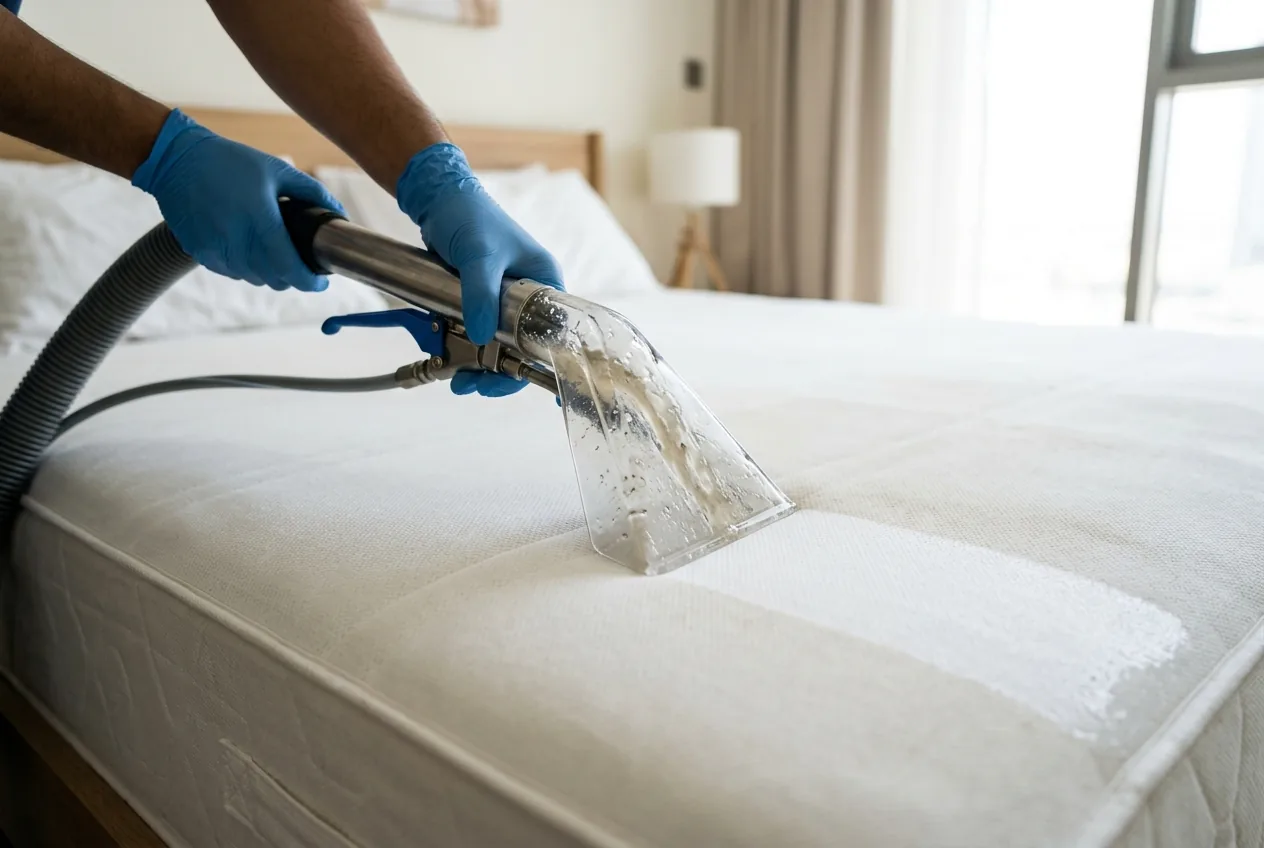
- Have the mattress and upholstery deep cleaned periodically. Extraction lifts what is already deep in the padding and below the pile, which is the part none of the above can reach.
What is mostly a waste of money
- Anti-mite sprays on their own. They may kill some mites on the surface. They do nothing about the allergens already in the mattress, which are the actual problem, and nothing about the skin cells feeding the next generation.
- UV wands. Light does not penetrate into a mattress. Anything living below the surface is unaffected.
- Deodorising without cleaning. Fragrance over a dusty mattress is fragrance over a dusty mattress.
- Replacing the mattress and changing nothing else. A new mattress in the same room with the same habits is on the same path, just starting again.
How this fits with cleaning the rest of the house
The bedroom is where it matters most, but it is not a sealed box. Skin cells, dust and dander move around a home and settle in whatever is soft. If you are going to do this properly, the mattress, the sofa and the carpets are one job rather than three, and doing them in a single visit is both more effective and better value than spreading them across the year.
Mattress cleaning starts at 125 AED for a single and is priced by bed size, and sofas are from 75 AED per seat, materials and VAT included. The full price list by size is in our mattress cleaning guide.
For the full detail on how a mattress clean is carried out, how the method changes between memory foam and innerspring, and how often to book, see our guide to mattress cleaning in Dubai. The same visit can cover sofas and upholstery and everything else soft in the house through our carpet and sofa cleaning service. To book, send us your mattress sizes and seat count on WhatsApp or get an instant quote. Every job carries our 24-Hour Re-Clean Promise.
Frequently asked questions
Can you get rid of dust mites completely?
No, and any company promising that is overselling. The realistic goal is to reduce the population and, more importantly, remove the allergens and the skin cells that sustain it. Weekly hot washing, a zipped protector and periodic deep extraction do that. Complete elimination in a lived-in home is not achievable.
Does professional mattress cleaning help with dust allergies?
It removes a large part of the dust and allergen load sitting in the mattress, which many people notice. It is not a medical treatment and we do not present it as one. If someone in the house has persistent symptoms, that is a conversation for a doctor, and cleaning is a sensible thing to do alongside their advice.
How hot does bedding need to be washed?
Wash bedding weekly in the hottest water the care label allows. The American Lung Association recommends at least 120°F, about 49°C, and the Asthma and Allergy Foundation of America puts the threshold for killing dust mites at 130°F, about 54°C. Check the label, because forcing a high temperature on the wrong material will damage it, and a weekly wash at a moderate temperature still beats an occasional hot one.
Are mattress protectors actually worth it?
Yes, provided it fully encases the mattress with a zip and provided you wash it. It keeps moisture, skin cells and dust out of the core, which is the part you cannot clean yourself. An open-sided fitted cover helps far less.
Do dust mites live in sofas and carpets too?
Yes. Anywhere with fabric, warmth and a supply of skin cells suits them, which includes sofas, armchairs, rugs and curtains. That is why treating the bedroom in isolation gives a smaller result than dealing with the soft furnishings in the house together.
How often should a mattress be professionally cleaned?
Every six months suits most homes, and every three to four months with pets on the bed, small children or dust allergies in the family. Our mattress cleaning guide covers the method and the full price list by size.