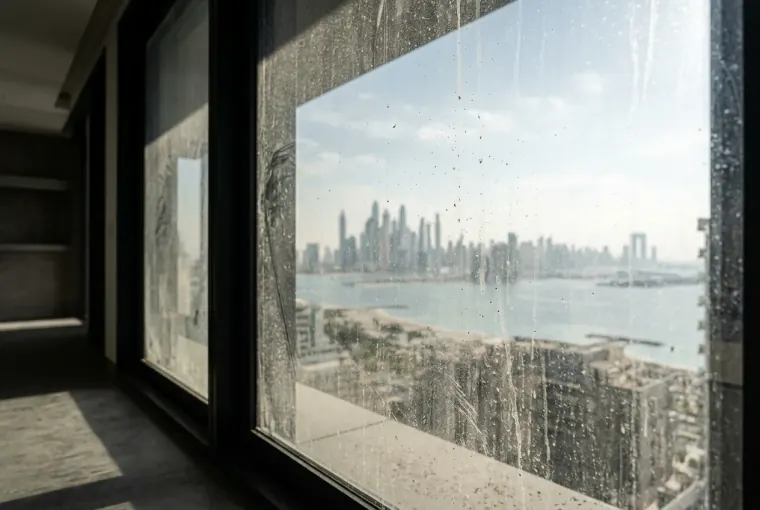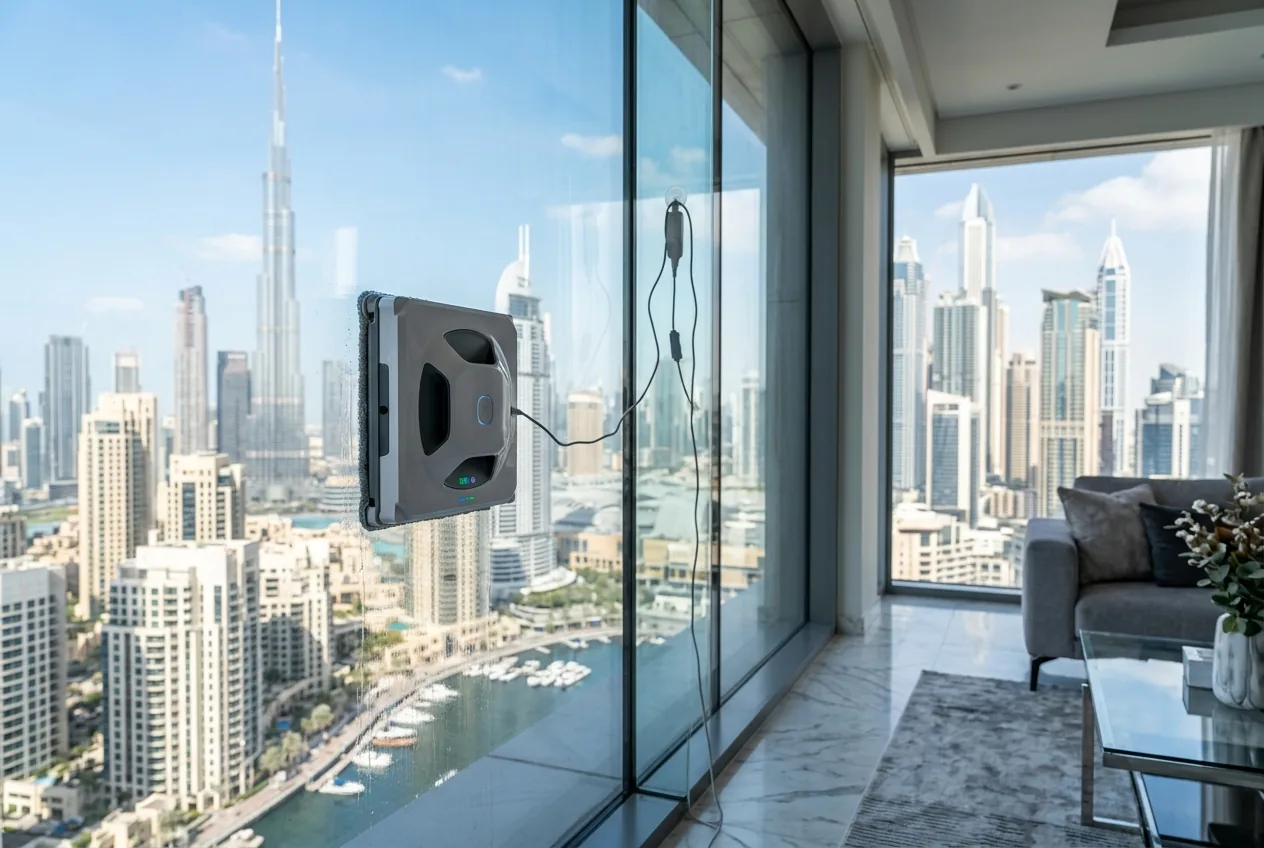
Window cleaning robots have come a long way, and in a dusty city like Dubai they are an appealing idea: clean glass without the ladder, the bucket, or the wait for a service. But do they actually work, and are they worth it? Here is an honest, practical guide to robotic window cleaners in 2026, and where they fit alongside a professional clean.
They are clearly catching on, too. According to the market-research firm Technavio, the robotic window cleaners market is forecast to grow by 5.40 billion US dollars between 2025 and 2030, at a compound annual growth rate of 29.7 percent.
How does a window cleaning robot stay on the glass?
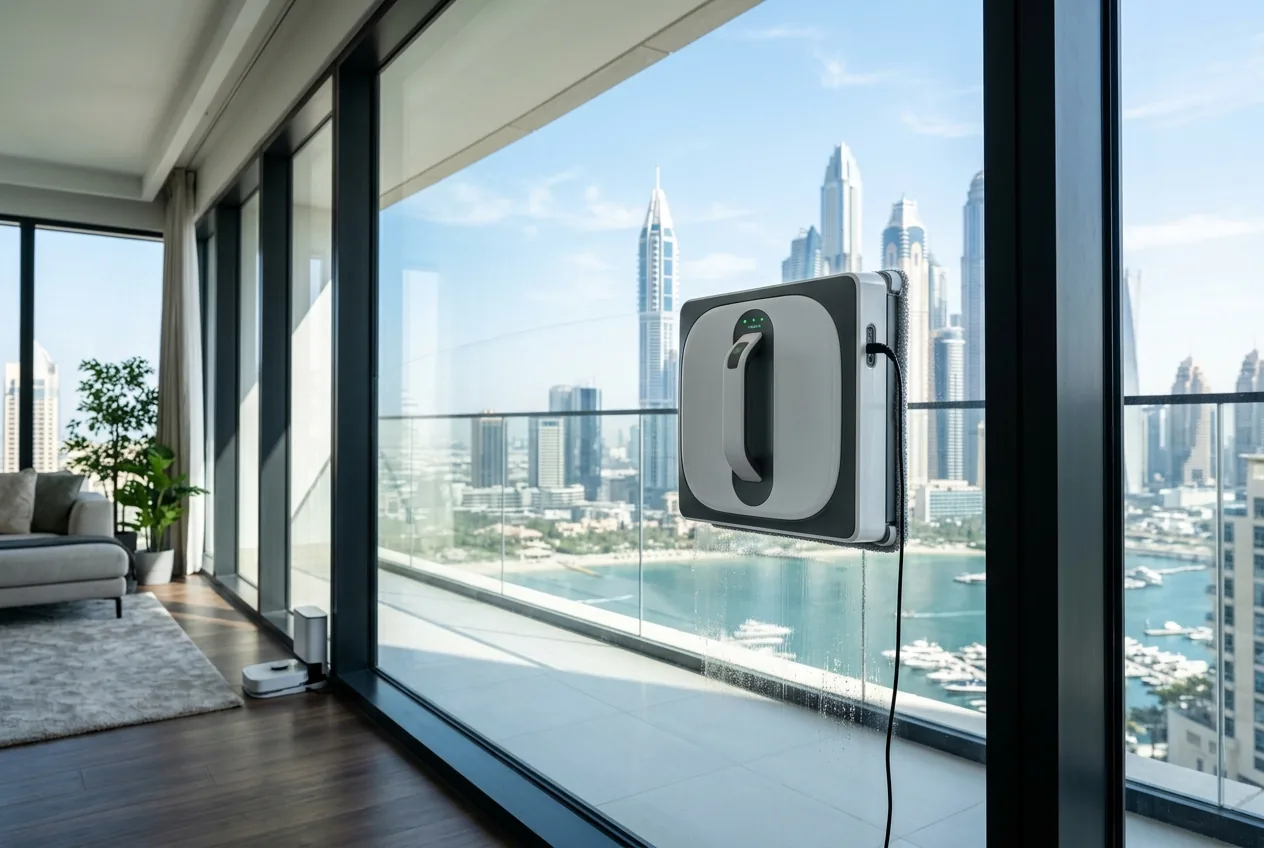
The most common worry is simple: will it fall? Most robots use a powerful suction motor to create a vacuum seal against the glass, a little like a reverse hovercraft holding it in place. There are two main designs you will see:
- Circular, dual-disk robots use two rotating microfibre pads that "walk" across the window, mimicking a scrubbing motion. They handle heavy grime well but can struggle in corners.
- Square, linear robots use a large pad and tracked movement. They tend to be faster and reach corners better, which suits large modern panes.
Reputable models include a safety tether. Our rule is straightforward: if the tether is not anchored to something heavy inside the room, the robot does not go on the glass. Suction can falter on a humid morning, and a tether is cheap insurance against a fall.
Why consider a window cleaning robot in Dubai?
In a climate where dust settles daily, glass rarely stays clear for long, and waiting between professional visits is not always practical. A robot lets you keep windows looking fresh between cleans with minimal effort.
The bigger benefit, though, is safety. Ladder falls are a genuine household hazard, and many Dubai villas have high windows in double-height living rooms that are awkward and risky to reach. A robot removes that risk entirely for routine upkeep.
Where do window cleaning robots work best?
- Large, flat panes. The bigger and flatter the glass, the better a robot performs.
- Routine maintenance. For keeping already-clean glass looking good, a robot is excellent.
- High, hard-to-reach windows. Anywhere a ladder would be dangerous, a robot is a safer option for light cleaning.
- Double and triple glazing. Robots clean one side at a time and handle multi-pane units without trouble.
Where do window cleaning robots fall short?
It is worth being clear: a robot will not replace a professional deep clean. Here is why.
- Edge gaps. Even the best square robots leave a small margin at the very edge of the frame.
- Heavy grime. After a rare Dubai rain, mud needs a manual first pass. A robot will simply smear it.
- Frameless glass. On glass railings and frameless panes, cheaper bots without edge-detection sensors can drive straight off the edge.
- Curved or textured glass. Curved architectural glass and rough, sandblasted surfaces break the vacuum seal.
How do you get a streak-free finish with a window robot?
The most common complaint is circles or streaks left on the glass. A simple sequence fixes most of it:
- Run dry first. Start with dry pads to lift loose sand and dust. Spraying liquid onto a sandy window turns grit into sandpaper and risks scratching the glass.
- Then run damp. Swap to fresh, clean pads and lightly mist them with a low-residue glass cleaner. Do not soak them, or the robot will slip and lose suction.
- Finish with a polish. A final pass with a clean microfibre pad and a little distilled water gives the best shine.
Is your home robot-ready?
Before you buy, check a few things:
- Most robots need a minimum window size of roughly 35cm by 35cm to manoeuvre.
- Very thin glass can be vulnerable to the suction pressure of high-end models.
- Frames flush with the glass can confuse a robot's edge detection.
- Many robots are corded, so you will need a power outlet within a few metres.
One important note: window robots are not designed for solar panels, which need specialist tools suited to the heat and surface texture.
What are the ongoing costs of a window cleaning robot?
A robot is not a one-time purchase. Budget for replacement microfibre pads (never reuse a dirty pad on clean glass), low-residue cleaning solution, and periodic replacement of safety cables, which degrade under the Dubai sun over time.
The verdict: robot or professional?
If you want every corner perfectly pristine, you will still want a professional clean periodically. But if your goal is bright, fresh-looking windows every day without scheduling a service each time, a quality robot is a genuinely useful tool. It turns a big chore into a quiet background task.
The two work best together. A professional clean resets the glass and clears the heavy grime, sand, and salt that a robot cannot handle, and the robot keeps things sparkling in between. Our window cleaning in Dubai service uses pure-water (water-fed pole) technology to reach upper-floor windows safely from the ground and dries streak-free, with every exterior clean backed by our 7-Day Rain Guarantee.
A robot is a brilliant maintenance tool. A professional deep clean is what gives it a clean slate to maintain.
Moving into a new place where the windows are covered in construction dust? Do not start with a robot. Book an instant quote for a proper reset first, or contact us on WhatsApp at +971 50 505 6015 and we will take care of the heavy lifting.