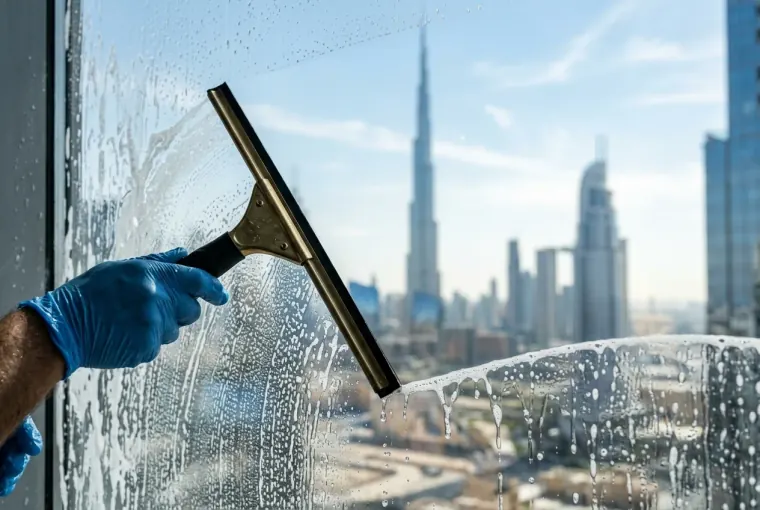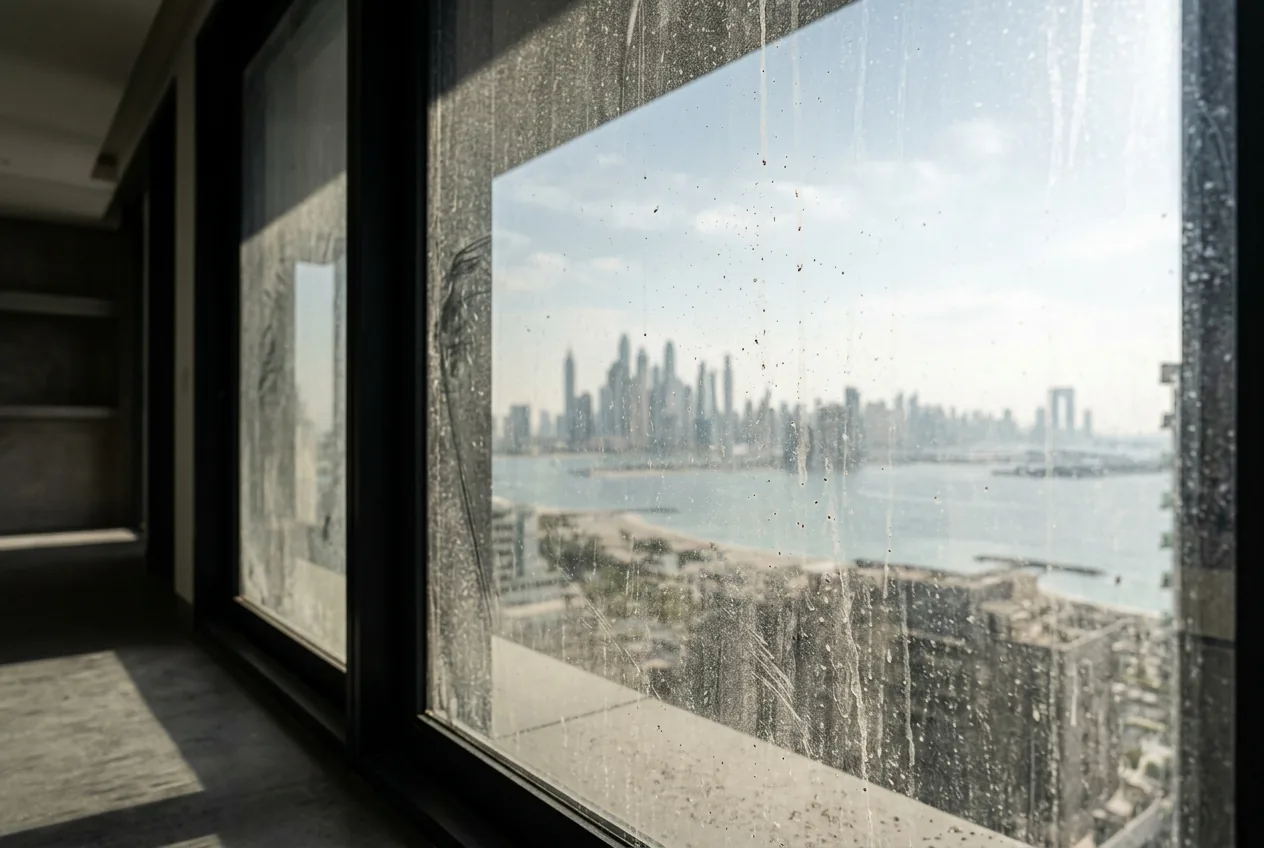
You did not buy a villa with a view to spend your weekends worrying about glass. But in Dubai, your windows are under constant, microscopic attack from two relentless forces: wind-blown sand and salt-laden air. Left unchecked, both can cause damage that no amount of cleaning will reverse.
If you can already feel a faint haze on your glass that simply will not wipe away, you may be looking at the early stages of permanent change. Here are five ways sand and salt quietly damage your windows, and what you can do to slow them down.
1. Sand scratches glass at a microscopic level
Desert sand is not just dust. It is largely silica and jagged mineral fragments that are, in many cases, harder than residential glass. When a sandstorm rolls in, those particles hit your windows at speed, leaving tiny impact craters known as micro-pitting.
The numbers back this up. On the Mohs hardness scale used by geologists, quartz, the main mineral in desert sand, scores 7, while ordinary glass typically sits between 4 and 7, so wind-driven sand is easily hard enough to scratch your windows.
You usually cannot see individual pits, but together they change how light passes through the glass. That is why older desert-facing windows can look permanently cloudy even after a thorough clean.
The biggest mistake is dry-dusting. Wiping dry sand across glass grinds those sharp particles into the surface and creates fine scratches. The safer approach is to rinse first with plenty of water to float the grit away before anything touches the glass.
2. Salt air can etch the glass surface
Salt is hygroscopic, meaning it draws moisture from the air even in the heat. That moisture turns surface salt into a concentrated solution that sits on your glass and slowly reacts with it.
Over time this can dull the surface and leave a milky look that does not respond to vinegar, soap, or elbow grease. At that point the only options are professional glass polishing or, in serious cases, replacement. Properties close to the coast are most at risk, which is why regular cleaning matters far more there than further inland.
3. Salt corrodes window frames and seals
The glass is only half the story. Aluminium frames are corrosion-resistant, not corrosion-proof. Salt air can attack the protective layer on aluminium and create small pitted spots that look like harmless white dust at first.
Once the frame is compromised, the seal around the glass can fail. Many of the foggy, double-glazed windows people blame on the glass are actually the result of a failed seal letting moisture creep between the panes, where it can no longer be cleaned. Salt also dries out the rubber gaskets around your windows, making them brittle and prone to cracking.
4. Sand clogs tracks and blocks drainage
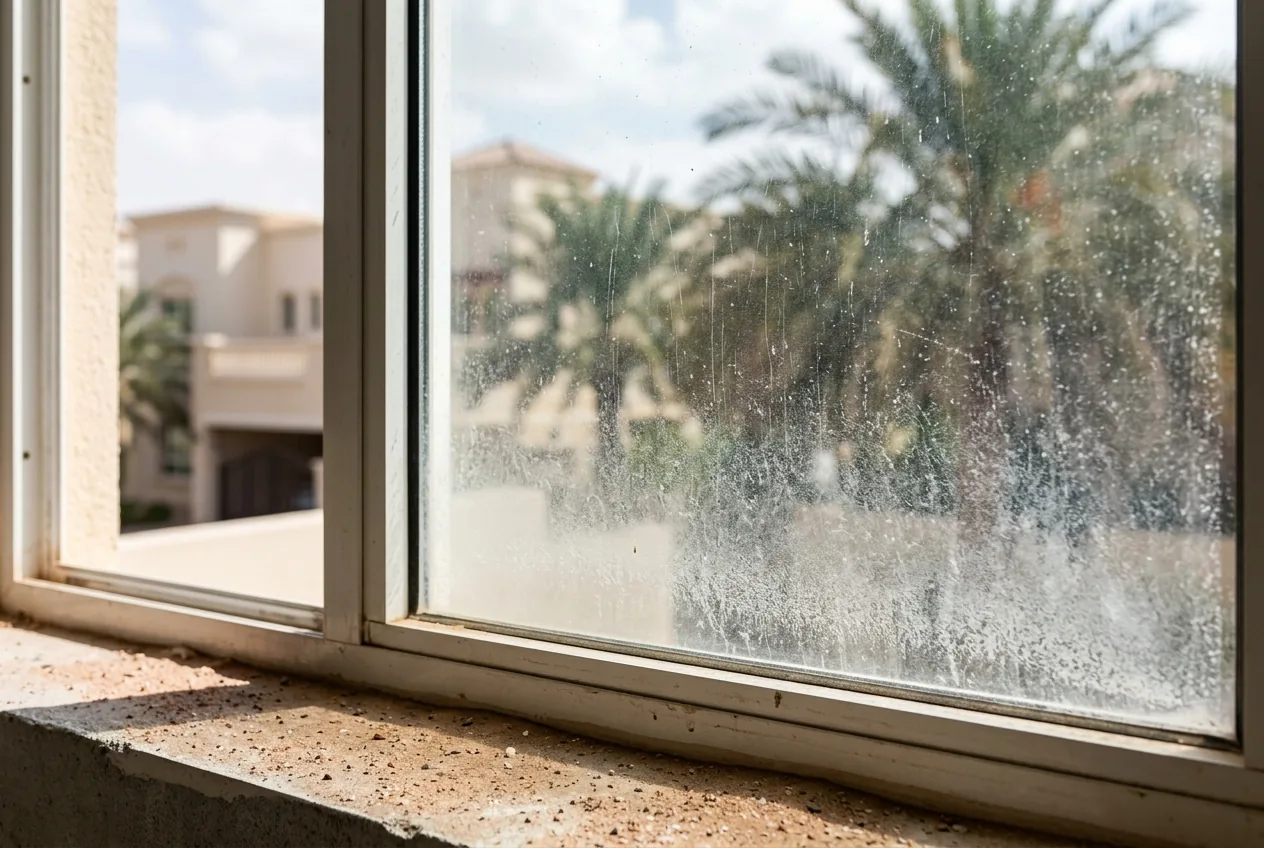
Most window and sliding-door frames have small weep holes at the bottom that let condensation and rainwater drain away. In a sandy environment, those holes fill with dust. Add a little humidity and that dust sets into a hard, cement-like sludge.
When drainage is blocked, water pools in the track and sits there, accelerating corrosion of rollers and locks. If your sliding doors feel heavy or gritty to open, the tracks are already suffering. The fix is simple and cheap if you stay on top of it: vacuum the tracks regularly rather than letting grit build up.
5. Sand and salt break down protective coatings
Many modern windows carry low-emissivity or water-repellent coatings designed to manage heat and shed water. Abrasive sand wears these coatings away, while salt can break down the materials over time. Once the coating is gone, the glass is more exposed to UV and further etching.
Harsh chemicals make this worse. Ammonia-based cleaners can strip whatever coating remains, especially on glass already weakened by salt. A gentle, pH-neutral approach is far safer.
How do you protect your windows from sand and salt in Dubai?
The theme across all five is the same: consistency beats intensity. A gentle, regular routine protects your glass far better than an aggressive once-a-year scrub.
- Rinse before you wipe, especially after a sandstorm, so grit is floated off rather than dragged across the glass.
- Vacuum tracks and weep holes regularly to keep drainage clear.
- Avoid ammonia and harsh degreasers near coated or tinted glass.
- For anything high, large, or exposed, bring in a professional rather than risking a ladder.
Our window cleaning in Dubai service uses pure-water (water-fed pole) technology, which lifts sand and salt without harsh chemicals and reaches upper-floor villa windows safely from the ground. Every exterior clean is backed by our 7-Day Rain Guarantee.
The cost of prevention is a fraction of the cost of replacement. A little routine now protects a major investment later.
If your windows are starting to haze over or your sliding doors are getting harder to move, do not wait for the damage to become permanent. Book an instant quote or contact us on WhatsApp at +971 50 505 6015 and we will help you protect your view.